
Skip to content
Search AI Powered

Latest Stories

5 Crazy Historical Facts to Look Up While High

Stoned and bored? Time to blow your mind with weird shit from history.

When you’re high, few activities are more satisfying than looking up random shit online. From weird ass subreddits to educational YouTube channels, we’ve got plenty of ideas to keep you occupied during your next smoke sesh – but this one in particular is for the history buffs who are attracted to the unusual.

History books provide us with (sometimes) useful information that help us shape our perceptions, political views, and plans for the future, but what about the strange and obscure facts no one really talks about anymore?


This article features five of the craziest historical facts we could find, inspired by curious minds, the inanity of human behavior at any given time period, and a whole lot of weed.

1. Napoleon Bonaparte was once attacked by a horde of bunnies.

Napoleon Bonaparte was a French military general, the first emperor of France, and is renowned as one of the world’s greatest military leaders throughout history.

He’s also the guy who was attacked by a group of bunny rabbits

This bizarre moment happened in July 1807, after Bonaparte signed the Treaties of Tilsit to end the French-Russian War. To celebrate, he proposed a rabbit hunt – a grave mistake on his part. 

About 3,000 bunnies were gathered ahead of the hunt, but when released, instead of scattering and hiding, they charged directly at Bonaparte and company, resulting in the fluffiest bloodbath in history.

2. The Olympics used to give out medals for the fine arts.

The Olympics has made a ton of changes to their featured sports over the decades, but from 1912-1952, the organization featured fine arts as one of their categories. 

This included painting, sculpting, architecture, literature, and music. We vote to bring this back – although we may be a little biased as writers.

3. Ketchup was sold as medicine in the 1830s.

We all know ketchup as one of the most basic food condiments, but in the 1830s, the sugary tomato sauce was revered as a medicine. Ketchup was prescribed to cure ailments like diarrhea, indigestion, and jaundice. Step aside, Tums.

4. Turkeys were once worshiped like gods.

Today, turkeys are basically ignored – unless it’s Thanksgiving. But in 300 B.C., the birds were viewed by ancient Mayans as vessels of the gods, often playing a significant role in religious rituals as a symbol of power and prestige. 

The Pilgrims truly left nothing sacred.

5. Pope Gregory IX once declared war on cats.

On June 13, 1233, Pope Gregory IX issued the Vox in Rama, which linked cats to satanism and witchcraft. As a result, an essential war was declared on felines, where annual cat-killing festivals occurred and the animals were mass tortured throughout the year. 

It’s unclear why this happened and why things were allowed to be taken this far, but that’s part of the mystique of mass sentiments, and how wildly they can alter themselves over time.

Now, I know everyone isn’t a fan of cats, but c’mon, Pope Gregory.

Need a little more Bluntness in your life? Subscribe for our newsletter to stay in the loop.

More For You

11 Movies to Watch While Tripping on Your Next Shroom Trip

11 Movies to Watch While Tripping on Your Next Shroom Trip

Many activities are amplified for the better when you're tripping on magic mushrooms, and watching trippy movies is definitely near the top of that list.

Shrooms provide consumers with an almost otherworldly experience: one where colors are brighter, music is magical, and everything is open to a seemingly unprecedented interpretation.

Keep ReadingShow less
white house

Greedy Liars: How Cannabis Became a Schedule I Controlled Substance in the First Place

How did cannabis become a schedule I controlled substance?

It’s a critical question that not enough people are asking.

Keep ReadingShow less
Humankind has made use of cannabis much longer than most people realize.

Who Discovered Weed? The Ancient Origins of Cannabis

Trying to tell the story of ancient cannabis is like trying to guess the picture on a puzzle with the majority of the pieces missing. Most of what we know about the historic uses of cannabis come from sparse archaeological evidence and oft doggy translations of texts that are thousands of years old. We can make some educated guesses, but, in the end, the more answers we discover, the more questions we unveil. 

Nevertheless, thanks to changing public opinion and waves of legalization, cannabis research is getting prime-time attention. As a result, we know more about the origins of cannabis than we have ever before—and now it’s time to recover some of our long-lost history. 

Keep ReadingShow less
How to Make a Cannagar Without a Mold: A Comprehensive Guide. - The Bluntness

How to Make a Cannagar Without a Mold: A Comprehensive Guide. - The Bluntness

How to Make a Cannagar Without a Mold: A Comprehensive Guide

There are so many different ways to consume cannabis, and each method speaks to the kind of consumer you might be. If you're the type of cannoisseur to opt for a blunt, chances are you like your weed with a little kick, which is why a cannagar is the perfect product for you.

What Is A Cannabis Cigar? aka Cannagar

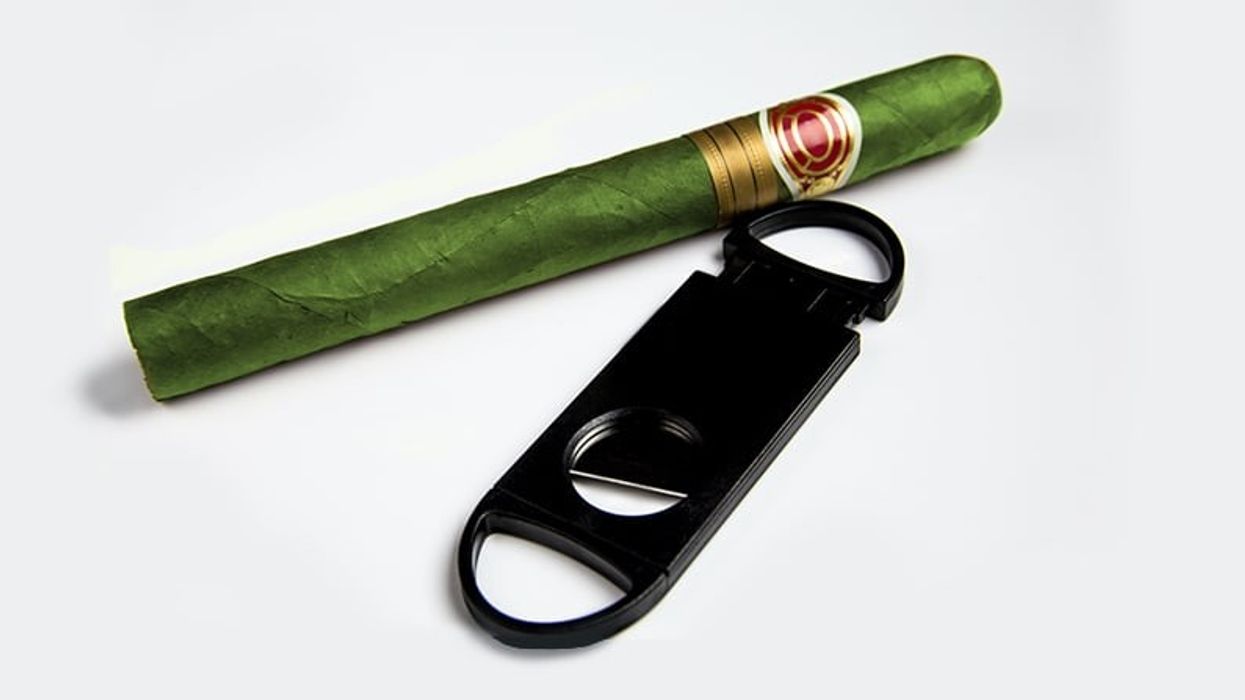
Made from a cannagar mold, cannabis oil, cannabis leaves, and about 4-12 grams of ground flower (depending on how hard you’re willing to go), cannagars are designed to knock you on your ass with sophistication.

Keep ReadingShow less
Will drugs pick up on your cannabis edibles, or no? - The Bluntness

Will drugs pick up on your cannabis edibles, or no? - The Bluntness

Edibles & Drug Dogs

Now that marijuana legalization has gone so widespread, getting pot is just a car ride away for most people in the U.S., even those living in prohibition states.

And by gawd, they are making the drive, too, breaking all sorts of laws by crossing imaginary state lines with real weed.

Keep ReadingShow less