Cannabis may have a robust safety profile with zero fatal overdoses on record, however smoking moldy weed can pose a serious risk to human health.
To prevent health risks such as allergic reactions and respiratory issues, it is crucial to avoid smoking moldy weed.
While you might have thought mold was reserved for unkempt showers or perishable food items, unwanted fungi can grow in your stash if you’re not careful. Inhaling mold spores from contaminated cannabis can cause symptoms such as difficulty breathing, especially for individuals with respiratory issues or weakened immune systems.
Don’t let this information send you into a panic, though. While moldy cannabis is definitely something to stay far away from, as long as you know how to identify it, you should have no trouble avoiding toxic fungi on your cannabis flower.
How to Identify Moldy Weed
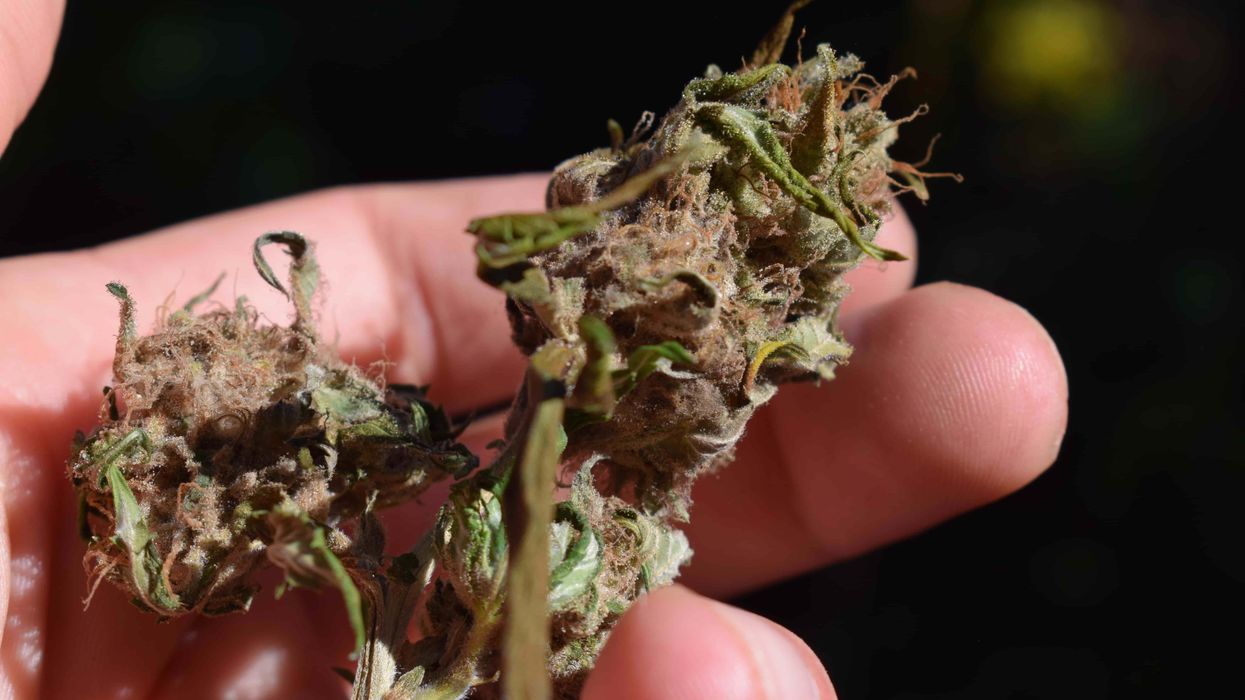
Spotting mold on an ancient loaf of bread is pretty straightforward: if your slice of toast looks like it’s wearing a wig, chances are you shouldn’t eat it. However, identifying mold on cannabis in your weed stash isn’t always as simple as you’d like it to be. When identifying mold, it's important to look for visible signs such as discoloration, fuzzy growth, or a white powdery substance on the buds. Inspecting your cannabis closely helps you find mold before it poses a health risk.
A moldy cannabis sample will typically have a grayish-white coating, often described as a white powdery appearance or white powdery substance. This moldy weed look can also include dark splotches, web-like growth, or a mushy texture. However, this coating can look similar to the all-important trichomes, those sticky, crystalline glands found on the leaves and buds of cannabis.
There are many different types of mold in the world, but with cannabis, the most common forms found in the cannabis plant are powdery mildew (one of the most widespread plant diseases), botrytis (a.k.a., “gray mold” or “bud rot”), and white fuzzy mold (a.k.a. Sclerotinia).
While trichomes have a shimmery, ethereal effect and appear as shiny crystals, cannabis mold has a more powdery appearance, as well as a distinct smell. Trichomes are what make your weed smell like weed, which can have many different scents depending on the terpene profile, but mold will have your weed smelling…well, moldy. The distinctive odor is often compared to that of a damp basement.
This is one reason why reliable, accurate lab testing is so important for legal cannabis products, and even then consumers will still want to know what to watch out for. Same thing if you’re buying cannabis from the informal market or growing your own – be vigilant about any moldy cannabis situations and always inspect for visible signs to help find mold before consumption.
What Causes Moldy Weed?
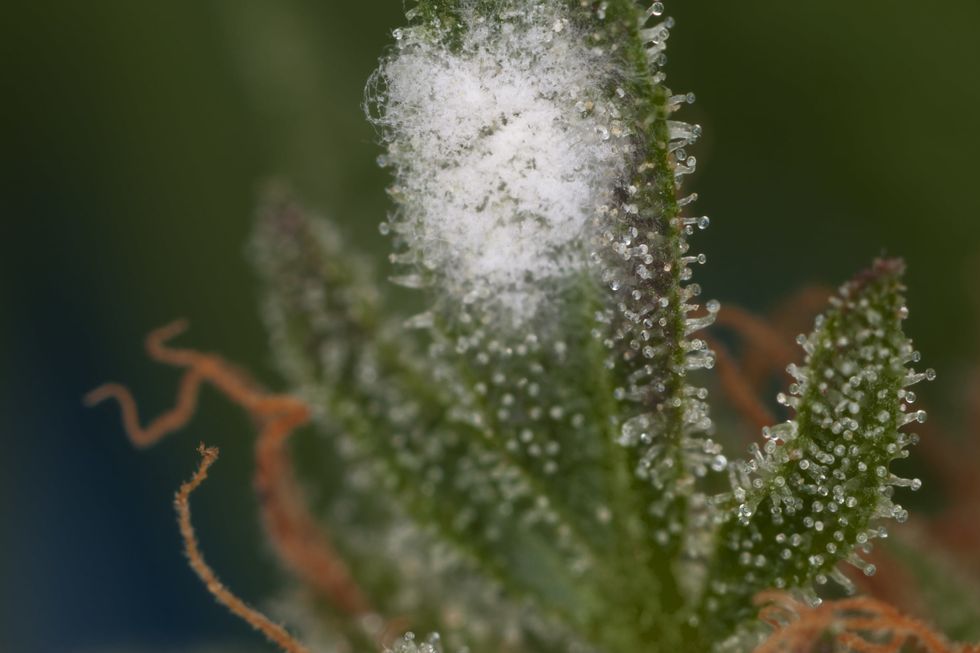 A good picture showing white mold next to cannabis trichomes.
Moldy weed occurs from “moisture lock” – a.k.a., if harvested cannabis is not properly dried and cured before it’s stored or plastic-wrapped and packaged, that container becomes the ideal incubator for growing fungi. Mold grows especially well in a damp environment or humid environment, where excess moisture and poor ventilation create perfect conditions for growing mold.
Cannabis plants are also susceptible to mold while they’re still in the ground, requiring growers to be all the more vigilant with their crops. Mold grows rapidly in humid conditions and warm temperatures, so environmental control is crucial during cultivation, drying, curing, and storage. Additionally, nutrient deficiencies during cultivation can make cannabis plants more susceptible to mold.
Professional and responsible growers are well aware of this risk and take extra precautions to make sure mold does not happen.
However, not all growers are knowledgeable about the risks of moldy weed (or they don’t care), and since moist weed weighs more than dry weed, shady or incompetent growers may take advantage of the extra income without caring about the possibly hazardous ramifications.
Storage is also a big deal. As a consumer, you need to be aware of how to properly store your stash to prevent mold from growing. Growers can do everything right, but if you’re not storing your cannabis in a safe, cool, dark, dry, airtight container, your weed runs the risk of being damaged. Storing cannabis in a damp environment or humid environment increases the risk of growing mold, so always avoid humid conditions to protect your stash.
What Happens When To Your Body When Smoking Moldy Weed
If you’re a regular cannabis consumer, it’s important that you’re aware of the risks that go along with smoking or vaping moldy weed – especially if you reside in a state without legal access, or don’t know your cannabis farmer on a personal level. Consuming cannabis that is contaminated with mold can expose you to harmful mycotoxins, allergic reactions, and serious respiratory issues.
Perhaps one of the most unnerving details about what happens when you smoke moldy weed is that it affects consumers differently, depending on your body, health, atmosphere, and a number of other indicators. Mold exposure, especially prolonged exposure, can lead to long-term health consequences, including immune system weakening and chronic respiratory problems.
If you’re an overall healthy person, moldy weed likely won’t pose any massive threat to your wellbeing – but you’ll probably still experience unpleasant symptoms like excessive coughing, wheezing, lung irritation, or nausea, and you’re definitely still at risk to experience life-threatening symptoms, particularly respiratory problems.
On the other hand, if you’re immunocompromised, have pre-existing respiratory conditions such as asthma, or, most dangerously, are allergic to mold, smoking weed that is moldy can have very serious health consequences for you. Individuals with pre existing respiratory conditions are at heightened risk for severe respiratory problems and complications from mold exposure.
Patients using medical marijuana should be especially cautious, as their health conditions may make them more vulnerable to the effects of moldy cannabis. It is crucial for medical marijuana users to select lab-tested, mold-free products from authorized dispensaries to ensure safety.
However differently it may affect consumer to consumer, there’s no denying that smoking or vaping moldy weed is overall dangerous, unhealthy, and should be avoided at all costs. Here are some of the dangers you may incur if you happen to smoke moldy weed:
- Sinus Pain/Congestion:
Inhaling mold will likely result in sinus pain or congestion, and even more so if you are allergic to mold. In some extreme cases, this may result in a persistent sinus infection.
- Fatigue/Muscle Weakness:
This can be tricky to identify, since many strains of cannabis usually result in consumers feeling physically tired or sleepy – especially if you’re consuming large amounts.
However, only you know your body, and if you’re experiencing a form of fatigue or weakness that you’re unfamiliar with, this might be from smoking moldy or otherwise contaminated cannabis.
- Brain Fog:
Another unsavory side effect of inhaling mold is brain fog. Again, this can be a little tricky to identify, since high amounts of THC can result in consumers feeling a bit “foggy.”
However, there’s a noticeable difference between THC-fueled fogginess and actual brain fog, which can leave you feeling confused, disoriented, or at a loss for words.
- Persistent Coughing / Respiratory Problems:
Okay…I know. Tricky to identify, right? Especially if you’re a newer consumer who coughs your lungs out every time you take a hit. However, if the coughing persists for some time after inhalation or is painful, this is a sign that something may be wrong. Mold exposure from smoking weed can cause respiratory problems ranging from mild coughing and sinus pain to severe lung infections, especially in those with pre existing respiratory conditions.
- Chest Pain:
Again, if you’re coughing so hard and persistently that it’s painful, or you feel general pain or pressure in your chest after consuming, you may be a victim of moldy weed.
- Fever:
This only happens in rare, extreme cases, but if you believe you might have smoked moldy weed and you have a fever, you should see a doctor immediately.
- Mold Balls:
This also only happens in rare cases, but it is the worst reaction your body can have to moldy weed.
If you aren’t careful, or are consuming large amounts of moldy weed, the fungal spores you inhale can snowball in your lungs, resulting in mold balls that you’ll likely need surgery to remove. This can lead to serious cases of pneumonia, and even be deadly..
How to Be Preventative About Moldy Weed
There’s a lot of risk that goes along with smoking moldy weed, and although you may not experience serious, life-threatening side effects, it’s never a good idea to take a chance – no high is worth that!
Unfortunately, once your weed has been contaminated with mold, there’s no salvaging it. Desperate consumers have attempted cutting around the mold to get to the “good” part, but once mold has entered the chat, there isn’t a whole lot of “good” left.
If you have reason to believe there’s something wrong with your weed, you’re probably right. Moldy weed should be discarded immediately to prevent health risks. It’s best to err on the side of caution and toss it, rather than take the massive risk.
Luckily, there are a few measures to take to ensure your cannabis stays fresh, healthy, and mold-free:
- Store your weed properly. To prevent moldy weed, your best defense is proper storage. Exposing cannabis to the wrong lighting, temperature, humidity, or oxygen levels can easily promote mold growth and bud rot. To prevent mold growth and prevent bud rot, always use a sealed container, such as an airtight or vacuum-sealed option, to keep out excess moisture and maintain freshness.
To combat this, use airtight containers (preferably dark glass or food-grade aluminum), and avoid storing your cannabis in the freezer or fridge. The low temperatures and moisture are too risky. You should also store your stash in a dark, dry place and be wary of excess humidity levels.
- Try to only purchase your cannabis from a trusted source who you know personally. This is easier said than done for a lot of people, especially if you reside in a region where cannabis isn’t fully legal, but if you can get your cannabis from someone you know personally and can trust, you minimize the risk of coming across moldy weed – or otherwise tainted product.
- Always examine your weed before consuming – especially if you’ve had it for a while. The older your weed is, the more risk it has of developing mold if it hasn’t been stored properly. To avoid this and give yourself peace of mind, get into the habit of examining your flower before consuming. Regularly inspect your stash for visible signs of mold, such as white, gray, or fuzzy spots, before use. If you want to break up some of the cannabis material and give it a sniff, be careful about potentially inhaling mold spores through your nose.
Smoking moldy weed is never worth the risk, and you should never pass contaminated cannabis on to others. When in doubt, throw it out.
Safe Storage and Handling
When it comes to keeping your cannabis stash mold-free, how you store and handle your weed is just as important as where you get it. Mold growth thrives in environments with excess moisture, fluctuating temperatures, and poor airflow—conditions that can easily develop if you’re not careful with your storage methods. For anyone, but especially those with weakened immune systems, consuming moldy weed can pose significant health risks, ranging from mild allergic reactions to serious lung infections.
To prevent mold from taking hold, always store cannabis in airtight containers—think classic mason jars or specialized cannabis storage solutions. These containers help maintain a stable humidity level, keeping excess moisture at bay and making it much harder for mold spores to develop. Avoid plastic bags or containers that aren’t fully sealed, as they can trap humidity and encourage mold growth.
Location matters, too. Keep your stash away from direct sunlight, which can degrade cannabinoids and create temperature swings that promote mold development. A cool, dry, and dark place—like a cupboard or drawer—is ideal. Never store cannabis in a damp basement, bathroom, or anywhere with humid air, as these environments are breeding grounds for mold.
Proper storage isn’t just about preserving flavor and potency—it’s a crucial step in protecting your health and preventing significant health risks associated with moldy marijuana. By taking a few simple precautions, you can keep your weed fresh, potent, and most importantly, safe to consume.
The Bluntness is gearing up for big things. Don't miss out! Sign Up for our newsletter to stay in the loop.