
In their latest effort to spread awareness and spark conversation, Honeysuckle Magazine has partnered with hip hop legend and cannabis advocate/entrepreneur Lil Wayne on “Diversity in Cannabis,” a Times Square campaign that will go down in history and hopefully set the stage for how New York approaches legal cannabis.
Ronit Pinto, founder and publisher of Honeysuckle, has long been a champion of elevating overlooked stories, communities, and social issues.
The vision for this year’s Indigenous awareness campaign blossomed from Pinto’s inspiring dialogues with Mary Jane Oatman, founder of THC Magazine and the Indigenous Cannabis Coalition--the first coalition of its kind in international history.
Oatman, a descendant of Chief Looking Glass of the Nez Perce Tribe of the Columbia River Plateau, has made it her mission to promote tribal sovereignty in cannabis, allowing for intertribal trade, the ability to practice and consume cannabis in their traditional manner, and to use it medicinally in the ways her ancestors have.
The Nez Perce Tribe’s relationship with cannabis (specifically hemp) dates back to the 1800s, when the hemp economy was run by the tribe’s women in order to trade with and make grain, ropes, and fishing gear.
“This campaign is super huge for Indian Country,” Oatman says. “It elevates the Indigenous social equity cannabis conversation with such a global presence.”
Oatman encourages Native American-owned cannabis businesses to collaborate and support one another in their ventures through the Indigenous Cannabis Coalition.
The Powerful Stories of Cannabis & Indigenous Communities
“I have been interested in the Indigenous plight most of my life. How could you live in America, and not be interested?” Pinto says.
“My specific interests in Indigenous culture are not exclusive to cannabis, but also include ancient forms of spirituality and an overall connection to nature.”
While Honeysuckle has previously covered stories from Indigenous cultures, practices, and philosophies, there isn’t a lot of public awareness surrounding Indigenous cannabis use.
Indigenous people have been using the plant for industrial, spiritual and medicinal purposes for centuries. Despite this tradition, they have been wrongfully targeted by anti-cannabis laws in countries with higher Indigenous populations like Canada or Australia.
Although cannabis is used almost equally among all demographics, minorities have borne the brunt of the stigma, making up for most cannabis arrests worldwide.
Just as many Black Americans are seeking justice and equity within the industry that has put them in danger over the years, Indigenous people in America and all over the world are looking for justice and a chance for Indigenous cannabis brands to step into the mainstream and educate people on how they utilize the plant for their culture and wellbeing.
Amplifying Overlooked Questions, Narratives, and Solutions
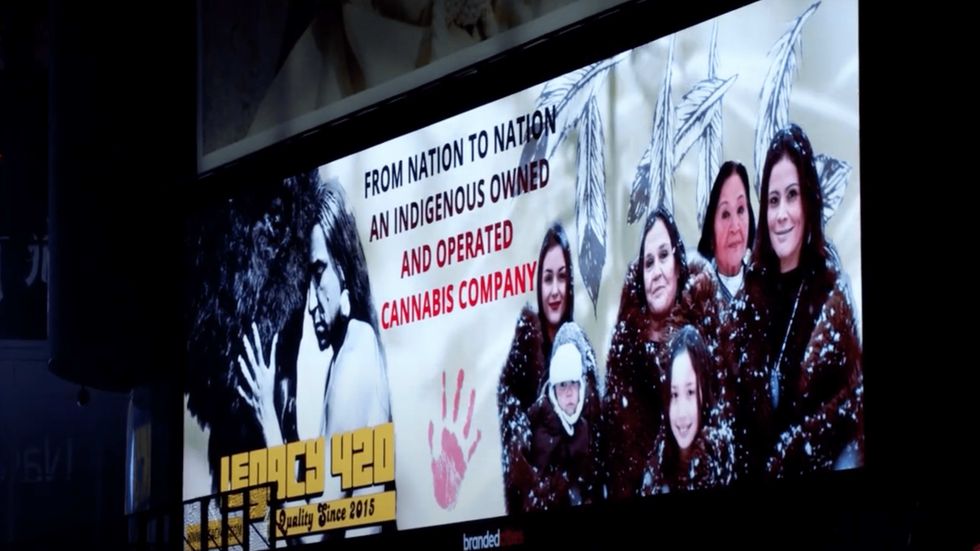 Legacy 420 -- an Indigenous owned and operated cannabis company -- graces the lights of Times Square.Images courtesy of Honeysuckle
In a world where social justice is quickly making its way to the forefront of culture, it’s difficult to recognize which brands truly have equity at heart, and which ones are simply hopping on the bandwagon for opportunity.
Honeysuckle has naturally been at the forefront of a lot of these movements that are now becoming mainstream--movements that haven’t gotten enough press coverage like the amplification of Black experiences, the practice of regenerative agriculture, and challenges faced by the formerly incarcerated.
“Now mainstream publications are becoming more vocal about their support for these communities, which is great. Indigenous stories are still largely excluded from the media; we will do our part to amplify them to the best of our ability,” Pinto says.
For example, Missing and Murdered Indigenous Women is a topic that members of Native tribes are trying to bring more attention to, she continues.
“Missing and Murdered Indigenous Persons Awareness Day, which was made a national day to honor the spirits of such people on May 5th, is a small step in the right direction, but it is just the beginning of what needs to happen for things to improve. Indigenous women are murdered or go missing without much consequence.”
Creating A Story-Driven Campaign Like No Other
Honeysuckle’s “Diversity in Cannabis”, which went live in Times Square on 4/20, celebrating Indigenous cannabis collaboration, women and BIPOC-owned brands, including Legacy 420, THC Magazine and the Indigenous Cannabis Coalition.
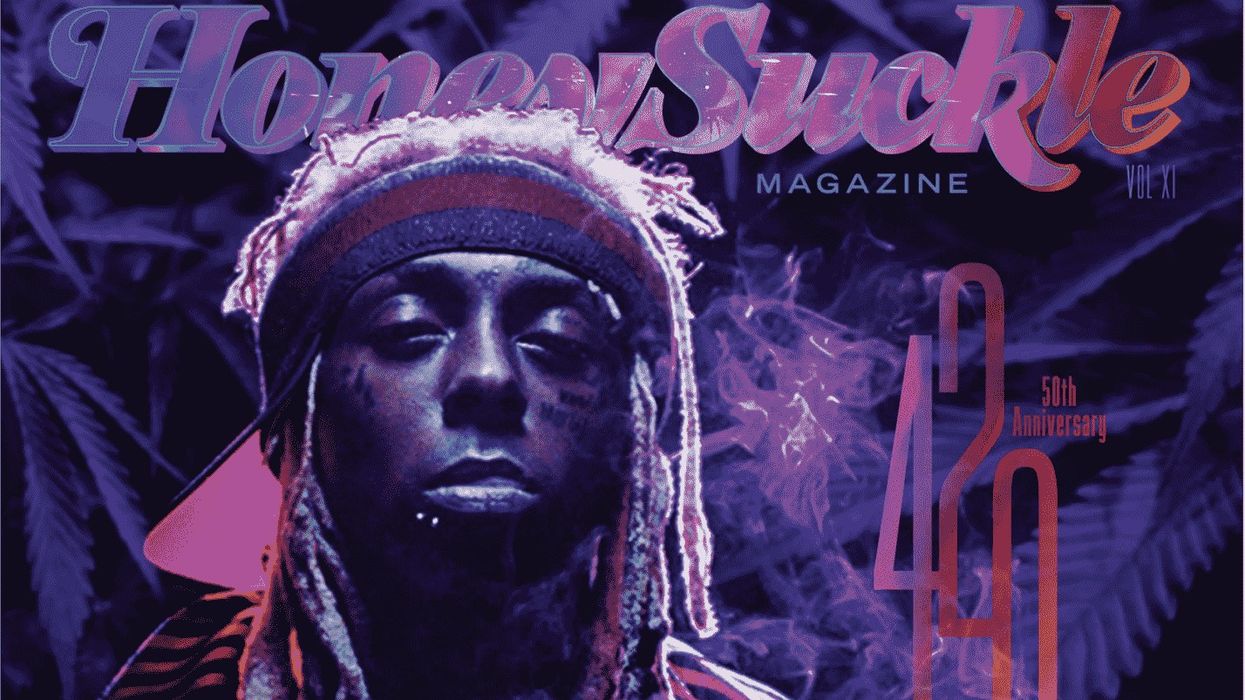
The collaboration was initially inspired by Honeysuckle’s latest cover for their 420 edition of Honey Pot (the brand’s digital publication that focuses exclusively on cannabis content), which features Lil Wayne and GKUA Ultra Premium.
“We took over two boards, with special guest Lil Wayne and his brand GKUA, the cover of our 420 print issue, on the iconic Thomson Reuters space,” Pinto says.
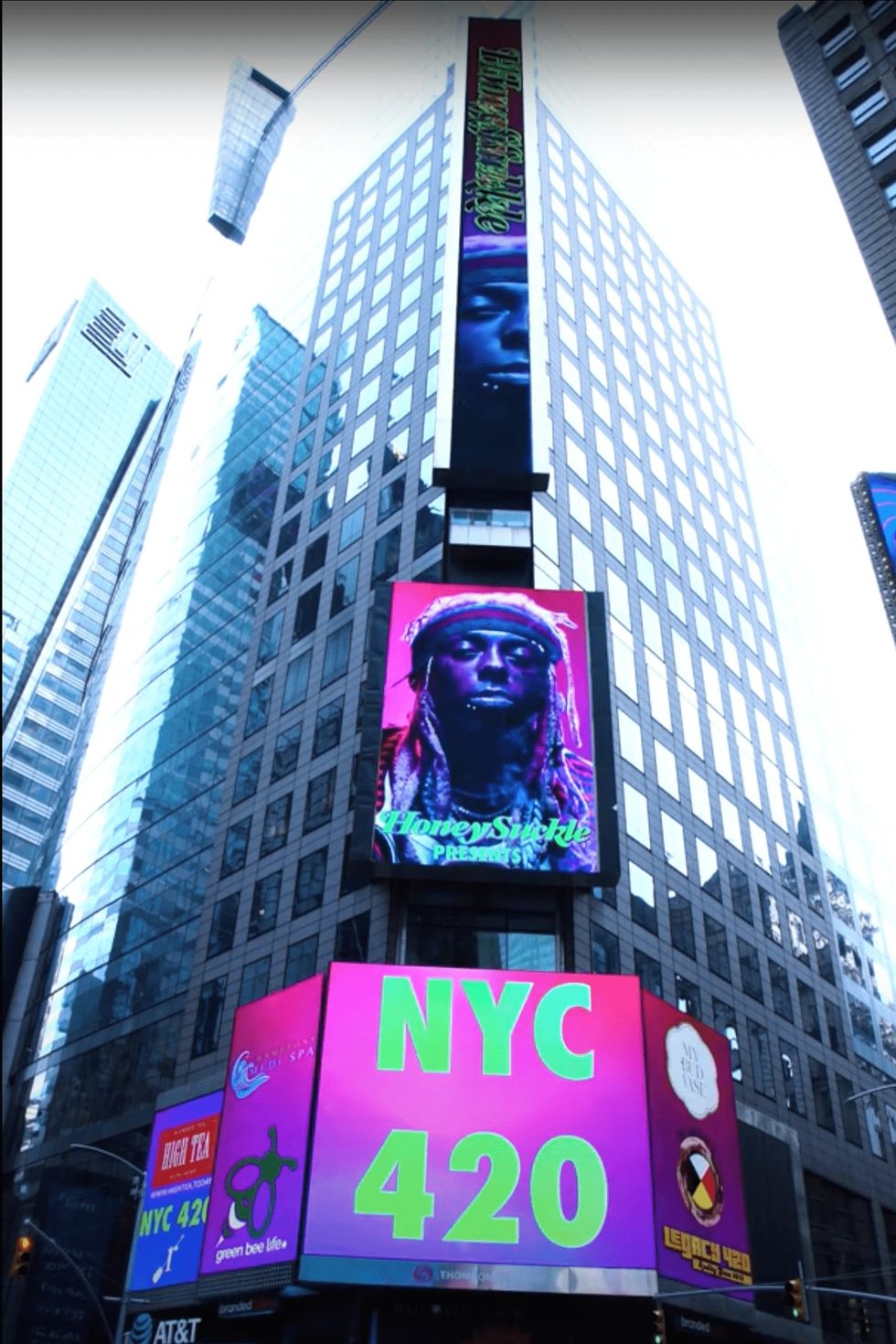 How high do you want to get?Image Courtesy of Honeysuckle
Honeysuckle reached out to their network, working closely with Doreen Sullivan, founder and CEO of My Bud Vase and Elizabeth Cramer Ernst, founder of Hamptons Medi Spa, to expand the campaign. They helped expand the campaign to an incredible group of female-led cannabis brands including Green Bee Life, HighTea.Today, and The Herb Somm.
“Between the historic anniversary of 4/20 and the passage of the MRTA legalizing adult-use cannabis in New York, we wanted to do something special for 420. It was a celebration,” says Ronit.
“I was originally working with a much larger media group and the price point was much higher than what I call our ‘friends, family’ and grassroots brands are accustomed to. And I realized important voices would be left out. So I created a parallel campaign, so that those who wanted to, could benefit.”
Honeysuckle’s Aim to Give Cannabis More of a Platform
Like most industries, cannabis took a pretty heavy hit over this past year with the pandemic, but many companies and entrepreneurs have been able to pivot their missions to online sales, events, and educational panels, and with more people prioritizing their health than ever before, awareness around cannabis and its potential health benefits is absolutely vital.
While many print publications have suffered greatly over the past year, Honeysuckle was able to shift their focus more to print, developing and expanding Honey Pot, and establishing fresh angles post-legalization.
“Anyone who was harmed or suffered loss due to COVID-19 are in our thoughts first and foremost. We lost cherished friends and family members ourselves, including one of our beloved consulting editors, the renowned journalist Patricia Bosworth. The pandemic has been incredibly difficult for some of our team,” Pinto recalls.
“But on a business front, this year gave us an opportunity to hone in on and reevaluate our strategy. This year I also got engaged, and my fiancé is our creative director. That has added an entire new dimension of growth; I never knew working and living with my life partner would have such a positive effect on our entire team.
“COVID was a great time to figure out what we want to do next and how we want to keep raising awareness around the issues that matter most to us.”
What’s Next for Honeysuckle Within New York’s Legal Industry?
The award-winning magazine is overall shifting their brand to focus more on exploring gender and racial justice within the cannabis world--a sort of “Playboy meets High Times”--and in a year that featured both the 50th anniversary of 4/20 and New York’s passage of the MRTA, the timing couldn’t have been more fitting.
The magazine has continued to advocate for cannabis legalization and education through Honey Pot, national campaigns like this one, and consistent outreach to ensure they are covering the issues that speak to everyone, especially New York’s grassroots cannabis community.
With New York well on its way to an established legal market, this only allows more opportunity for Honeysuckle to promote awareness, curiosity, acceptance, and education.
“The MRTA really seems to have made an immediate impact on the New York cannabis community,” Pinto says.
“Before, brands were afraid to advertise and spend money, and many don’t have big budgets. We are excited to tap into new demographics and see what’s new in the dynamic worlds of cannabis consumption, new technologies, brands and gender and sexuality.”
New York has declared they will make social justice and equity within the industry a priority, which is exciting for the communities who have been harmed in the past, but brands and entrepreneurs remain wary of whether or not the government will stick to their promise.
However, rather than sit around and wait, many brands like those featured in the campaign are already hard at work to promote these ideals that are so necessary to an equitable and just market.
For brands like these, culture is at the forefront of everything, and the intersection of cannabis, the arts, and other forms of creativity is becoming a greater priority, nation to nation.
Are you still missing out on The Bluntness newsletter? Sign Up today to stay in the loop.



 How to Make Weed Stem Tea in 5 Easy Steps - Potent Recipe - The Bluntness
Photo by
How to Make Weed Stem Tea in 5 Easy Steps - Potent Recipe - The Bluntness
Photo by  How to Make Weed Stem Tea in 5 Easy Steps - Potent Recipe - The Bluntness
Photo by
How to Make Weed Stem Tea in 5 Easy Steps - Potent Recipe - The Bluntness
Photo by