
“Are you cash only?”
Every budtender has heard this before.
Due to cannabis’s Schedule I status, most operators in the industry are forced into a cash-only model, which is fraught with headaches and danger.
The cash-only situation is also quite ironic in an industry dealing with so many compliance and tracking guidelines.
More importantly, the spikes in dispensary looting and robberies this past year are a painful reminder of just how vulnerable this industry is.
Marijuana-related businesses, or MRBs, have operated largely beyond the parameters and protections of banks and credit unions due to marijuana’s Schedule I status and regulations based in the Bank Secrecy Act of 1970 (BSA), which conflates cannabis businesses using a bank account or payroll services, for example, with money laundering.
Essentially, most banks are reluctant to work with cannabis businesses because of stigma and unclear regulations, which makes things harder for operators, who also have to compete with the black market.
As reported by The Bluntness earlier this month, a majority of cannabis sales in 2019 were black market sales across multiple states where it was medically and recreationally legal.
All of this is a huge hindrance to industry growth – even as more states have opted to regulate cannabis either for medical or adult use.
The tech world may have an answer for the cannabis banking quandary.
One of the newest solutions for cannabis is also one of the hardest to understand – blockchain.
Blockchain and How it Works
Googling it may make your head explode. It’s not really bitcoin, but there’s a lot of overlap.
In essence, blockchain uses a network of computers to create clear paths of high-volume records for transactions, deals or information that requires high security and verification.
In other words, for an industry that can’t access the security systems and credibility of an institution like a bank, blockchain creates transparent, protected records of a company’s sales and transactions without crossing any legal lines i.e., so cannabis businesses don’t get audited.
The promised transparency and security is what makes blockchain attractive to banking institutions, but Reuters suggests it has potential for secure voting, healthcare records, and property records as well. It can also provide an answer for safely buying cannabis with your Mastercard.
Oscar Dahl is the Director of Sales & Marketing of POSaBIT, a Seattle-based cannabis software company that facilitates card payments and cashless sales for cannabis retail.
In an email, Dahl explains, “the more you take cash away from the industry, the easier and more efficient tracking and reporting becomes. Dispensaries have, in the past, lost a lot of money after getting into bed with illegal payment providers that promised the world and ended up getting busted.”
Founded in 2015 by Ryan Hamlin and Jon Baugher, POSaBIT has developed a way for cannabis customers to pay for their pot with a debit and yes, credit card, with a few verification steps thrown in. With POSaBIT, dispensaries can now accept any institution’s debit or credit card without worrying about legal action or loss of revenue.
It does by utilizing blockchain and another tech innovation that often accompanies it, cryptocurrency. When a customer uses their card, debit or credit, at a dispensary using POSaBIT, they are not buying cannabis directly, but rather buying their total’s equivalent in a cryptocurrency called Litecoin. That Litecoin is then exchanged to the store for U.S. dollars through POSaBIT, and everyone leaves the legal exchange with what they came for: cannabis for the customer and money for the retailer.
Dahl wrote in an email that “the back-end reporting system we have for our payments system is really the secret sauce.” Meaning, the blocks that facilitate these speedy, encrypted transactions are compliant with tracking cannabis activity from seed to sale. “Stores have to comprehensively report to the state basically every action they take, and that includes all sales. Owners and managers can track every card sale easily.”
Blockchain is what facilitates these secure transactions, organizing these indirect chains of transaction information into bulk “blocks” that are then further organized in a “chain” to create a clear sales history for the business owner. Each block is recorded with a unique key code to secure access, so the “chain” cannot be hacked into or changed in any way without notifying the business owner.
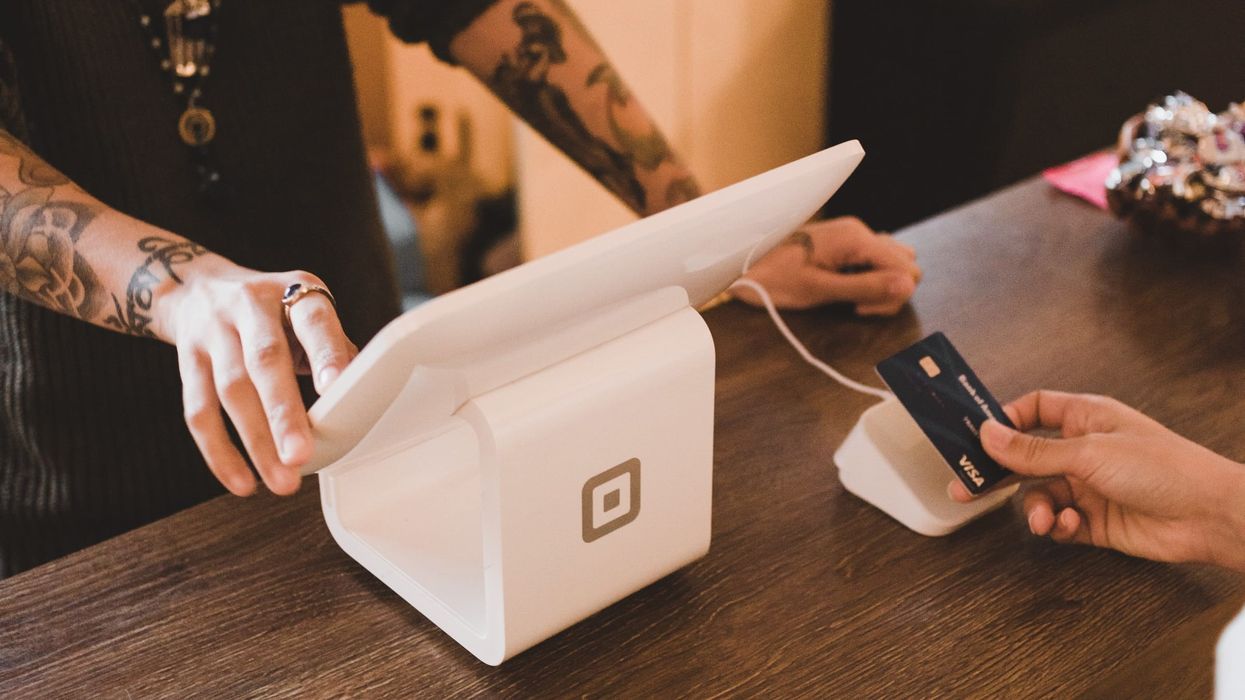
A similar third-party service like this exists in Alt36, who claim “we're like Square for the cannabis industry.” Alt36, like POSaBIT, can be used in conjunction with an existing point of sale system, but unlike POSaBIT, Alt36 is not a system in and of itself. On the company blog, Alt36 likens itself to Paypal, using blockchain and cryptocurrency features like “distributed ledger systems,” but without the coins.
Alternatives to Blockchain
While blockchain and cannabis seem rather compatible, not all cannabis software companies feel the way Dahl and his colleagues do. Michael Rappaport, head of Customer Success & Operations at cannabis ecommerce platform Treez, is hesitant to utilize the pros of blockchain without thoroughly vetting the cons.
“We have thoroughly investigated blockchain tech. It’s very applicable to the cannabis industry because it's a way to record events on a large scale and have confidence they were recorded accurately,” he tells The Bluntness.
“We have not offered a blockchain payment solution because crypto is new, and there's some instability there. We don't want to put people’s information to the whims of a new industry.”
Founded in 2016 in California, Treez works with high-volume cannabis retailers to streamline transactions and make Metrc-compliant inventory “easier.” Catalyzed by the pandemic, Treez has developed cashless and touchless payment options for curbside pickup transactions and pre-paid delivery without blockchain. But how?
According to Rapapport, you go to the bank and ask them. Rather than creating a new ledger for transaction nodes, Treez knowingly links customers directly to their bank login information. It’s not impossible, or a secret, but it requires labor and resources not every company is prepared for.
“What the tech uses is bank transfers. You don't need a digital wallet or an account. We partnered with banks and California financial institutions,” he says, like Bank of America and Chase. Customers can access their funds through their online bank account; we’re integrated directly with the bank.”
While Alt36 and POSaBIT have already begun operations beyond their home state, Treez is taking it slow in crossing state lines. In a “start-up” industry where laws can change on a dime, and with open-minded Sen. Pat Toomey expected to chair the Senate Banking Committee, it’s hard to say what cannabis retail will look like at the end of 2021.
“There isn’t going to be a perfect solution without growing pains,” Rappaport says, but there’s a reason they call it. “The pandemic is just one curveball. There's curveballs every month for cannabis retailers.”
Cannabis Banking Legislation Stalls
An increasing number of banks and credit unions are taking the plunge and engaging with MRBs in some way.
As of June 30, The U.S. Treasury’s Financial Crimes Enforcement Network has received 142,120 “Suspicious Activity Reports” indicating around 700 depository institutions each month were “actively providing banking services to marijuana-related businesses.”
However, unclear or unwritten regulations are a big show stopper, even for banks that have overcome cannabis stigma.
The House of Representatives approved a standalone bill, Rep. Ed Perlmutter (D-CO)’s The Secure and Fair Enforcement (SAFE) Banking Act, last year, but it has yet to pass in the Senate.
As recently as October, the House has continued to insert the bill’s language and legislation into other packages, including the HEROES Act for Covid-19 relief, which would provide cannabis businesses access to services and insurance from banks and financial institutions.
Another prominent piece of legislation favoring federal cannabis reform is Rep Jerrold Nadler (D-NY) Marijuana Opportunity Reinvestment and Expungement Act of 2019 (MORE Act), which was introduced last year and has finally been scheduled for a House floor vote as early as Wednesday, Dec. 2, 2020.
President-elect Joe Biden and Vice President-elect Kamala Harris have mentioned before that they intend to decriminalize marijuana federally, but even federally rescheduling marijuana would not necessarily give industry operators access to banking services and protections.
Harris is also the chief Senate sponsor of the MORE Act, which does include language that, if passed, would grant cannabis businesses and employees access to services like loans, small business protections, record expunction and equity programs for victims of the War on Drugs.
The American Bar Association also points out, in Cannabis Banking: Proceed with Caution, that the SAFE Banking Act “would represent an important milestone in the slow march toward the creation of a legal and regulated nation-wide marijuana market in the United States, but it would not be a panacea for banks or for their customers” and does not provide legal protections for any involved parties as it does not impact the federal scheduling of marijuana.
Among other small-scale changes for the state’s cannabis industry, California Gov. Newsom recently passed AB 1525, to protect California-based banking institutions working with cannabis from legal repercussions. This could, among other things, lessen blockchain’s appeal.
Are you still missing out on The Bluntness newsletter? Sign Up today to stay in the loop.




 Super Boof Strain: 2024 Strain of the Year - The Bluntness
 Super Boof Strain: 2024 Strain of the Year - The Bluntness