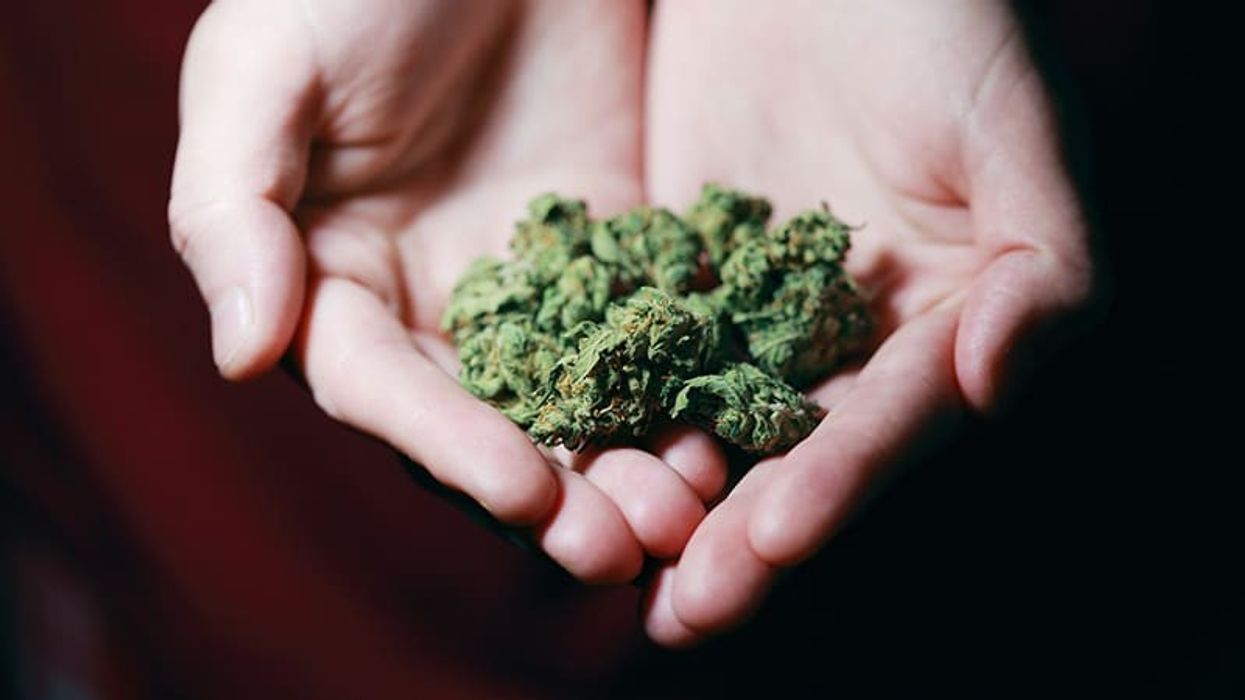

Cannabis is well on its way to federal legality, but for the past several decades, the plant has landed millions of people in prison – and most of those people have been People of Color.
The so-called War on Drugs is really a war on people, and while wealthy white operators around the world have already made a killing in the legal cannabis industry, it is a travesty to overlook or ignore the disproportionate impact cannabis prohibition has had on Black and Brown people.
While this may feel like old news, racially-fueled cannabis arrests are still happening across the country, despite its close proximity to full legality. In fact, arrest rates have actually risen since cannabis first began to legalize in the U.S., and Black people remain the primary targets.
These massive, systemic flaws in the system are not conducive to a successful industry, and they continue to perpetuate anti-cannabis and anti-Black stigmas throughout the nation.
7 People of Color Who Went to Prison for Cannabis
Of course, we could spout numbers and statistics at you all day, but to drive home the severity of the persisting issue, we’ve highlighted seven specific cases of People of Color who’ve been arrested for cannabis possession.
However, keep in mind that these are just seven of countless similar stories where lives and families have been ripped apart. This is hands down the most pressing, immoral, and unjust issue with today’s legal cannabis industry.
1. Bernard Noble
Bernard Noble’s story is one of the most dramatic examples of how the system has failed the cannabis industry and its faithful operators. The Louisiana native was riding his bicycle to pick up some groceries when he was stopped by local police.
The officers discovered a small bag of weed on Noble – about two joints’ worth of flower. Noble figured it would be a small offense that he’d have to post bond before and maybe handle with an attorney. Instead, he was sentenced to 13-and-a-half years in prison.
“I remember leaving the courthouse, chained up in the back of a hot van – worried that my kids would forget about me, and feeling like my life was over,” Noble wrote of his experience.
Thanks to an “outpouring of support and publicity” about his case, Noble was released early, but the young father still spent seven years behind bars for his minor offense.
Furthermore, because of the level of publicity his case received at the time, Noble was transferred to six or seven different prisons during his stint and even put in solitary confinement.
“Today, I am very blessed to be home and to have so many supporters who are lifting me up and helping me succeed. I love to see my kids and hear them say ‘Dad.’ I’m glad they remember me,” Noble wrote.
“But what I can’t forget is that day at the courthouse, or the many men I know who are still serving extreme sentences far out of proportion to the low-level offense they committed.”
2. Tameka Drummer
The 48-year-old Tameka Drummer has been in prison since she was 34. After being caught in possession of cannabis in Mississippi in 2008, Drummer was sentenced to life in prison. Life.
This is because of Mississippi’s “habitual offender” law, where judges are allowed to impose lengthy and severe sentences if the person in question has at least three felony convictions.
While two nonviolent prior convictions will land you with the maximum statutory sentence for the third offense, any prior convictions considered “violent” will get you automatically sentenced to life in prison without parole.
For Drummer, a woman with one prior charge categorized as violent, the cannabis conviction was an automatic trigger for her to spend the rest of her life in prison.
This is a problem that reaches beyond cannabis, as a 2019 analysis revealed that over 2,600 people are serving 20 years - life in prison because of Mississippi’s unforgiving criminal laws.
The prison system has always targeted Black people in America. And until these charges are reviewed and expunged and reparations are addressed, law enforcement will continue to use the plant as an excuse to do so.
3. Fate Vincent Winslow
Fate Vincent Winslow was arrested in 2008 for selling $20 worth of cannabis to an undercover police officer. Another victim of a habitual offender law – this one Louisiana’s – Winslow received a mandatory life sentence for the petty crime.
Although Winslow got the weed from a white dealer who the officers later identified, Winslow was the one taken into custody and sentenced.
Thankfully, the Innocence Project New Orleans caught wind of Winslow’s cruel fate and took on his case, successfully arguing his sentence down to twelve years, which he’d already served at that point.
Winslow was released in December 2020 – after having suffered eight months in a prison he claimed was not being properly protected against the COVID-19 pandemic.
Tragically, Winslow was shot to death in a triple shooting just five months after his release. Almost one year later and the investigation remains ongoing. No suspects have been identified.
4. Jamar Jones
Jamar Jones and his family were staying with his sister and her son in a New York City public housing facility when NYPD officers barged in at 6 a.m.
The officers claimed to have received a tip that someone was selling drugs in the unit. They searched the entire apartment, finding nothing more than a joint.
However, that didn’t stop them from arresting Jones, his wife, and his sister. Jones’ young son and two-year-old nephew were taken to the precinct.
As a result, Jones and family were banned from the apartment building, as one drug arrest can get you barred from public housing for good. Jones and his family were forced to move into a shelter, while the criminal case and child services investigation remain pending.
5. Sean Loftin
In 2014, 18-year-old Sean Loftin was hanging out in his Yonkers neighborhood park with a group of friends when they were approached by local police officers. The police commanded the young men to stand against a wall while they searched their pockets, finding nothing.
A few moments later, one of the officers noticed a joint on the ground close to where the boys had been standing. The officer demanded one of them claim the joint, or else they would all be arrested.
Out of fear for his friends’ safety, Loftin took the fall. Thankfully, Loftin was enrolled in Job Corps for an automotive industry career at the time, and he traveled two-and-a-half hours one way for his training.
Because of this, his Job Corps leaders wrote to the court on his behalf, granting the young man a tentative dismissal and rendering him one of the “lucky” few Black men to escape cannabis-based incarceration.
However, it’s hard to miss the fact that he shouldn’t have been arrested for simply standing near a floor joint in the first place.
6. Crystal Munoz
The 38-year-old Navajo mother Crystal Munoz was sentenced to 18 years in prison after being charged with conspiracy to possess with intent to distribute 1,000 kilograms of cannabis.
The Texas native claimed the extent of her involvement began and ended with drawing a map on a piece of notebook paper, as a favor for some friends to circumvent a drug checkpoint.
Those same friends testified against Munoz in hopes for more lenient sentences for themselves, burdening Munoz with an almost-twenty-year stint in prison.
Twelve years into her prison sentence, Munoz became one of the lucky dozen to be granted clemency by former-president Trump after her case was brought to the public by a fellow former prisoner, Alice Marie Johnson.
However, this came after Munoz was forced to give birth while in federal custody, delivering her child while in shackles. Although it’s a step in the right direction that Munoz was released early, it was still twelve years too late – and one person out of millions.
7. Fitzroy Gayle
In early 2020, right before the COVID-19 pandemic swept the nation, 20-year-old Brooklyn native Fitzroy Gayle was violently arrested for smoking weed in a park.
Gayle was allegedly smoking cannabis with a friend when they were approached by officers in plain clothes. The two young men ran, resulting in Gayle being thrown to the ground, punched, kicked, stomped on, and forcefully handcuffed.
Gayle was then arrested and charged with resisting arrest, obstruction of governmental administration in the second degree, and unlawful possession of cannabis in the second degree.
A witness recorded the horrific event and shared it to social media, resulting in NYPD launching an internal investigation. New York City Mayor Bill de Blasio said in a press conference he “had concerns” about the arrest, but none of the officers were penalized for their actions.
The uploader wrote about the event: “I’m walking home from work and this undercover cop was holding this man. The guy asked for the cop to identify himself, he ignore that. He asked what crime he commit, he ignore that too. I pulled out my phone. You can hear the guy screaming ‘I never thought it would happen to me’.”
Final Thoughts
Although these seven stories all involve People of Color wrongfully incarcerated for petty cannabis-related crimes, they were also handled very differently, as each person suffered their fate to a different degree of unlawfulness.
Not only should absolutely no one be in prison for cannabis today, but there needs to be consistency with how the plant is dealt with and viewed.
When one person is served a life sentence for carrying a bag of cannabis and another is lining their pockets with mammoth dispensary sales, something is deeply wrong with the industry, the legal system, and our nation as a whole.
Industry reform needs to happen now, and cannabis crime expungement needed to happen yesterday.
Need a little more Bluntness in your life? Sign Up for our newsletter to stay in the loop.


 How to Make Weed Stem Tea in 5 Easy Steps - Potent Recipe - The Bluntness
Photo by
How to Make Weed Stem Tea in 5 Easy Steps - Potent Recipe - The Bluntness
Photo by  How to Make Weed Stem Tea in 5 Easy Steps - Potent Recipe - The Bluntness
Photo by
How to Make Weed Stem Tea in 5 Easy Steps - Potent Recipe - The Bluntness
Photo by